Reed vs Ultrasonic Diffusers
Reed vs ultrasonic diffusers: which suits a small room, how long each lasts, daily upkeep, placement, and how to use either safely around pets and children.
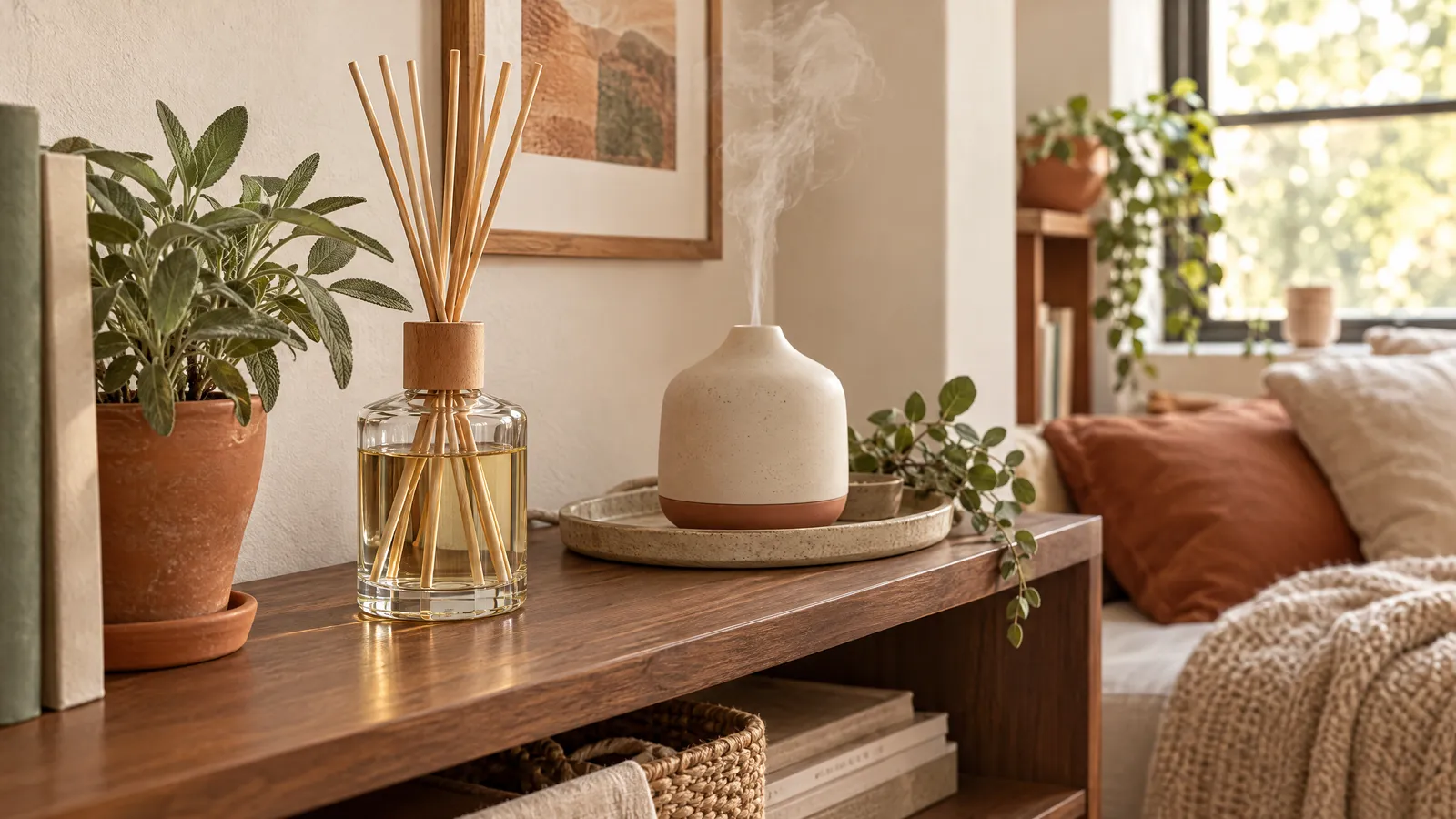
The short answer
Pick a reed diffuser if you want a soft, steady scent in one small, closed room, with no power cord, no noise and nothing to refill day to day. It suits a bathroom, an entryway or a small bedroom.
Pick an ultrasonic diffuser if you want scent you can switch on and off, a stronger result in a bedroom or living area, and control over how long it runs. It also adds a little moisture to the air, which some people like in dry winter rooms.
Be cautious with both if you share your home with cats, birds, a pet with breathing problems, or babies and young children. Neither type is automatically safe, and the safety section below covers what to check first.
If you’re weighing an ultrasonic against a waterless nebulizing diffuser instead, see our ultrasonic vs nebulizing diffusers comparison.
How each one works
A reed diffuser is a bottle of scented oil with a set of rattan or fiber reeds standing in it. The reeds wick the oil upward, and the scent evaporates from the exposed tips. Many reed oils are fragrance oils in a carrier liquid rather than pure essential oils, so check the label if that matters to you. You make it stronger by adding reeds or flipping them, and softer by taking some out.
An ultrasonic diffuser has a small water tank and a plate that vibrates at a high frequency, breaking water and a few drops of essential oil into a fine, cool mist. Tanks typically hold around 100 to 500 ml. Most run for a few hours per fill and switch off automatically when the tank is empty. A common starting point is about 3 to 5 drops of oil per 100 ml of water, but follow the manual for your diffuser and start low.
Side by side
| Reed diffuser | Ultrasonic diffuser | |
|---|---|---|
| Power | None | Plug-in or USB, typically low wattage |
| Scent strength | Soft and steady, close range | Adjustable, stronger, reaches farther |
| Best room | Bathroom, entry, small bedroom | Bedroom, living area, studio |
| How long it lasts | A 100 ml bottle typically lasts several weeks to a few months | Typically 3 to 8 hours per fill, depending on tank size and mode |
| Control | Add, remove or flip reeds | On and off, timers, intermittent mode, mist level |
| Noise and light | Silent, no light | Faint hum or bubbling, often an LED light |
| Upkeep | Flip reeds about once a week | Empty and wipe after use, clean about weekly |
| Moisture | None | Adds a little humidity nearby |
| Spill risk | Open bottle of oil can mark finishes and reach pets | Small water spill, mist can leave residue on nearby surfaces |
| Ongoing supplies | Refill oil and fresh reeds | Essential oils, water, occasional cleaning |
Who should pick which
A reed diffuser suits you if
- You want one small room to smell pleasant all the time without thinking about it.
- The spot has no nearby outlet, such as a bathroom shelf or a hallway console.
- You prefer something silent with no light, for a bedroom or a work corner.
- You can place it high and steady, out of reach of pets and children.
An ultrasonic diffuser suits you if
- You want scent only some of the time, such as an hour in the evening.
- The room is larger or open-plan, like a studio, where a reed barely registers.
- You like switching oils often; a reed diffuser needs new reeds when you change scents, while an ultrasonic just needs a rinse.
- You want a timer or auto shut-off so it doesn’t run while you’re out.
For picks and sizing in each type, see our guides to reed diffusers with essential oils and automatic aromatherapy diffusers. If you’re still deciding which style fits your space, our general guide to home diffusers covers room size and run time.
Safety around pets and children
This is the part to read before you buy either one.
- Cats are more sensitive to many essential oils than people or dogs. Oils commonly flagged as a concern include tea tree, eucalyptus, peppermint, citrus, pine, wintergreen and cinnamon. Talk to your vet before diffusing any oil in a home with cats.
- Birds have very sensitive airways. Don’t diffuse scented oils in the same room or shared air space as a pet bird.
- Dogs are generally less sensitive than cats, but strong scent can still bother them. Keep sessions short and leave a door open so they can walk away.
- Babies and young children: ask your pediatrician before diffusing around infants. Keep reed bottles and oil bottles completely out of reach; concentrated oils are dangerous if swallowed or splashed in eyes.
- Spills: a tipped reed bottle puts concentrated oil on fur, paws and skin, where pets can lick it off. Set it on a tray or coaster, well back from shelf edges.
- Watch for signs of trouble in pets, such as coughing, drooling, watery eyes, pawing at the face, unsteady walking or trouble breathing. Stop using the diffuser, air out the room and call your vet.
If anyone in the home has asthma or another breathing condition, check with their doctor before using either type.
Setting up either one
-
Choose the spot first. Put a reed diffuser in a small room where air moves gently, such as a bathroom shelf away from the shower spray or an entry console. Put an ultrasonic on a flat, stable surface at about table height, on a tray, near an outlet so the cord doesn’t cross a walkway.
-
Start low. Begin a reed diffuser with 3 to 5 reeds and flip them once after the first day. Fill an ultrasonic to the max line with room-temperature water, add about 3 drops of oil per 100 ml, and use the intermittent setting.
-
Wait two or three days before adjusting. Your nose gets used to a scent you live with, so it seems to fade even when it hasn’t. Guests usually notice it more than you do. Resist adding more reeds or drops right away.
-
Keep a simple routine. Flip reeds about once a week and replace them when they look dark and clogged, often every couple of months. Empty the ultrasonic after each use and clean it about weekly.
-
Store oils safely. Keep bottles capped, upright and out of reach, away from heat and direct sun.
Small-space tips
Use intermittent mode in a studio. In one open room, an ultrasonic set to intermittent mode, or run for 30 to 60 minutes and then switched off, usually scents the whole space without becoming overwhelming.
Start with fewer reeds in a small bathroom. Three to five reeds is often plenty in a closed room. Add more after a few days if you want a stronger scent.
Keep mist off wood and electronics. Place an ultrasonic on a tray, at least a foot or two (30 to 60 cm) from walls, wood furniture and electronics, so the mist doesn’t settle on them.
Keep reeds away from heat. A sunny windowsill, a radiator or a heat vent makes the oil evaporate much faster and can fade the scent within days.
Mind the water. If your tap water is hard, the plate collects white mineral deposits. Follow the manual’s advice on water; some recommend filtered or distilled water.
Mistakes to avoid
- Too many drops or too many reeds. In a small room, more scent quickly turns into a headache. Start low and build up.
- Running an ultrasonic all day. Use the timer or intermittent mode, and switch it off when you leave the room.
- Skipping cleaning. Residue and minerals reduce the mist, and standing water can turn stale. Empty the tank after each use.
- Topping up a reed bottle with a different scent. Old reeds hold the previous oil and muddy the new one. Change the reeds when you change the oil.
- Placing either one where pets or children can reach it. A low coffee table or a cat-accessible shelf is the wrong spot for an open bottle of oil.
Questions people ask
Is a reed diffuser or an ultrasonic diffuser stronger?
An ultrasonic diffuser is usually stronger and easier to adjust. It pushes a fine mist of water and oil into the air, so scent reaches farther and you control it with mist settings, timers and the number of drops. A reed diffuser gives a softer, steady scent that stays close to where it sits, and you adjust it by adding, removing or flipping reeds.
Are reed diffusers safe for cats and dogs?
Treat them with caution. Many essential oils are a concern for cats, and a knocked-over reed bottle puts concentrated oil on fur and paws, where it can be licked off. Keep any diffuser well out of reach, never let pets chew reeds, and give them a way to leave the room. Ask your vet before using scented oils in a home with cats, birds or a pet with breathing problems.
How long does a reed diffuser last?
It depends on the bottle size, how many reeds you use, the room temperature and airflow. A small bottle of around 100 ml typically lasts several weeks to a few months. Fewer reeds make it last longer and smell softer. A warm room, a heat vent or direct sun speeds up evaporation, so place the bottle somewhere cool and out of drafts.
How often should you clean an ultrasonic diffuser?
Empty and wipe the tank whenever you finish using it, rather than leaving water sitting overnight. About once a week, or as the manual directs, clean the tank and the ultrasonic plate gently with a soft cloth or cotton swab and a little white vinegar or mild soap, then rinse and dry. Oil residue and mineral buildup reduce the mist and can leave the tank smelling stale.