Ultrasonic vs Nebulizing Diffusers
Ultrasonic vs nebulizing diffusers compared on scent strength, oil use, noise, room size and cleaning, plus safety tips for homes with pets and children.
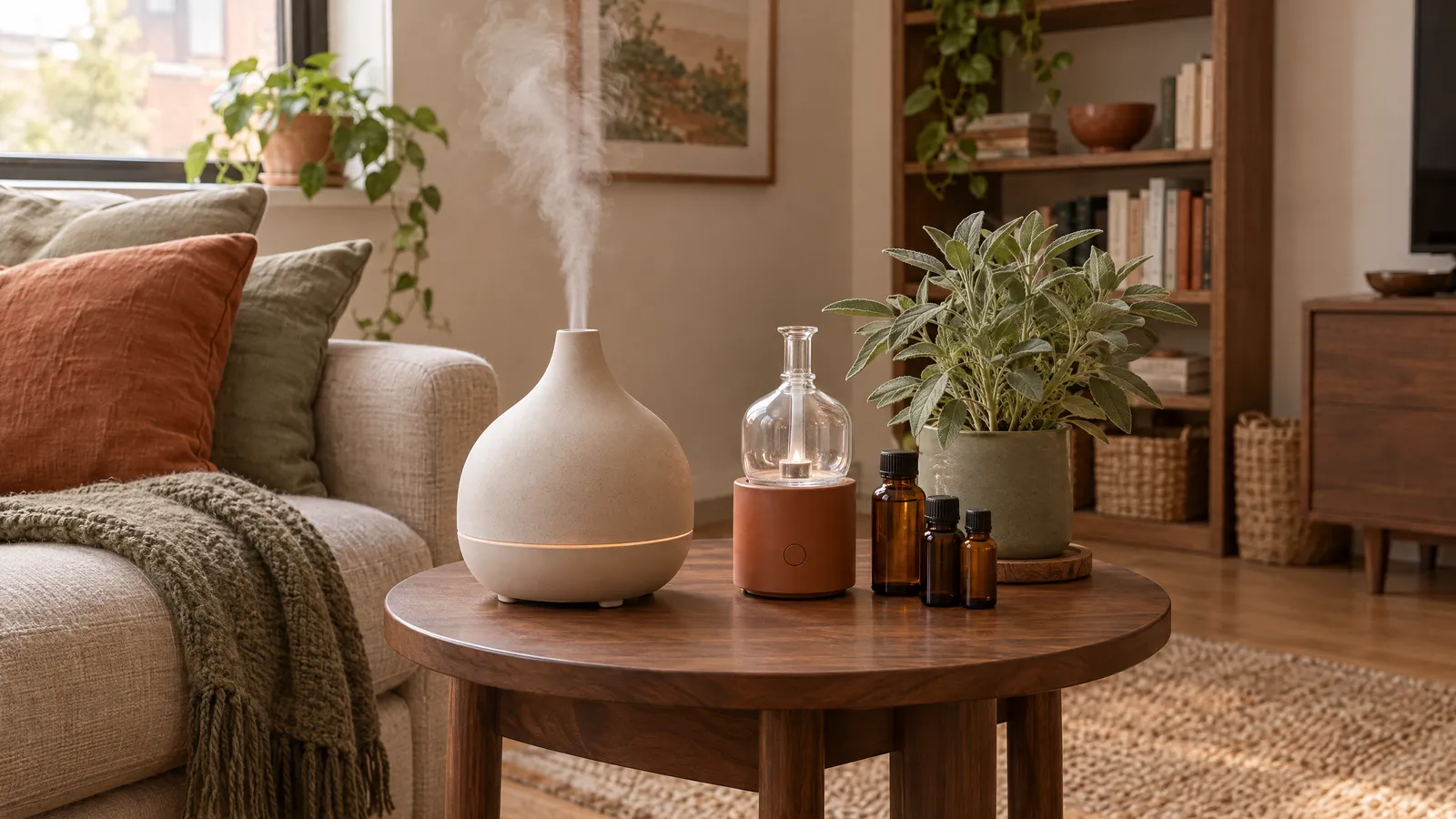
The short answer
Choose an ultrasonic diffuser for a bedroom, office or small living room where you want a gentle scent, a quiet machine and a few drops of oil to last hours. Choose a nebulizing diffuser if you want a strong, pure scent that fills a larger open space quickly and you’re willing to use more oil and pay more upfront. For most small apartments, ultrasonic is the easier, cheaper fit.
Side by side
| Ultrasonic diffusers | Nebulizing diffusers | |
|---|---|---|
| How it works | A vibrating plate turns water and a little oil into a fine mist | An air pump breaks pure oil into tiny droplets; no water |
| Scent strength | Mild to moderate | Strong |
| Oil use | Low; often 3 to 10 drops per fill | High; can use a small bottle in days if run constantly |
| Reservoir | Water tank, usually 100 to 500 ml | Oil bottle attached directly, no water |
| Run time | Often 4 to 10 hours per fill, depending on tank and setting | Usually runs on cycles; time depends on the oil bottle |
| Room size | Best for one room, roughly 100 to 300 sq ft (9 to 28 m²) | Larger rooms and open-plan spaces |
| Noise | Near-silent; faint bubbling | Audible pump hum |
| Humidity | Adds a little | None |
| Cost level | Low to mid | Mid to high |
When an ultrasonic diffuser is the better buy
Ultrasonic diffusers are the common type for good reason. You fill a small tank with water, add a few drops of oil and switch it on. The mist carries a gentle scent around one room, the machine is close to silent, and a small bottle of oil lasts a long time.
Most switch off automatically when the tank runs dry, and many have timers and mist settings, which is useful in a bedroom. For timer-driven models, see our guide to automatic aromatherapy diffusers; for more shapes and sizes, see our guide to home diffusers.
The mist does land somewhere. Over a few hours it can leave a damp film or white mineral dust on nearby surfaces, so set the diffuser on a tray or mat, away from wood finishes, books and electronics. If your tap water is hard, use filtered or distilled water to cut down on white residue and buildup on the plate.
Keep the cord and the unit well away from sinks and bathtubs, and don’t fill it while it’s plugged in.
When a nebulizing diffuser is the better buy
Nebulizers skip the water. A small pump pushes air across a glass tube that pulls in pure essential oil and breaks it into a very fine spray. The scent is noticeably stronger and reaches farther, so it suits a large open-plan room or a space that needs scent quickly.
You pay for that strength in oil. Running continuously, a nebulizer can empty a small bottle quickly, so most have intermittent settings, such as a few minutes on and a few minutes off. Use them; they save oil and keep the scent from becoming overwhelming.
They’re louder than ultrasonic models because of the air pump. In a living room that’s rarely an issue, but in a studio where you sleep a few feet away it can be. Thick oils and oils mixed with carrier oil can clog the nozzle, so check what the maker says the diffuser handles.
In a small space
In a studio or one-bedroom apartment, a strong nebulizer can be too much. One small ultrasonic diffuser on a low setting usually scents a whole small room, and you can move it from the living area to the bedroom at night.
If you want scent with no power, no water and no mist at all, reed diffusers are a third option; our guide to reed diffusers with essential oils covers those, and our comparison of reed and ultrasonic diffusers sets the two side by side.
Run any diffuser in short sessions, 30 to 60 minutes at a time, with a window cracked or a door open. Constant scent fades from your notice quickly anyway, and a break keeps the air fresher.
Pets and children
Be cautious with essential oils around pets and children. Cats and birds are especially sensitive to airborne oils, and some oils that people find pleasant can be harmful to animals. Ask your vet before you diffuse around pets, keep sessions short, and make sure a pet can leave the room. Stop if a pet drools, coughs, sneezes or seems unsteady.
Keep diffusers and oil bottles out of reach of children and pets; essential oils are harmful if swallowed and can irritate skin undiluted. Avoid diffusing in a baby’s room unless a doctor says it’s fine. If anyone in your home has asthma or is pregnant, check with a doctor before using diffusers regularly.
Care and lifespan
Ultrasonic: empty and wipe the tank after each use so oil and water don’t sit. Once a week, add a little white vinegar to water, run it for a few minutes, then wipe the plate gently with a cotton swab. Never scrape the plate, which is what makes the mist.
Nebulizing: wipe the glass after each oil change and run a small amount of rubbing alcohol through the nozzle every few weeks, or as the manual suggests, to clear residue. Let it dry fully before the next use.
Either type, cared for this way, typically lasts a few years. A drop in mist output on an ultrasonic unit usually means the plate needs cleaning, not that the diffuser is failing.