Coverlet vs Quilt
Coverlet or quilt? How the two compare on warmth, weight, sizing, overhang and washing, plus which suits warm sleepers, cold rooms and small bedrooms.
The short answer
Choose a coverlet if you sleep warm, want a light summer cover, or need a neat top layer over a duvet that you can wash often. Choose a quilt if you want one cover that keeps you warm on its own through spring and fall, with a heavier, softer feel. In a small bedroom, plenty of people keep both: a coverlet on the bed and a quilt folded at the foot for cold nights.
Side by side
| Coverlet | Quilt | |
|---|---|---|
| Construction | Thin woven or lightly quilted layer, little or no batting | Three layers (top, batting, backing) stitched together |
| Warmth | Light; a summer cover or a top layer | Moderate; works alone in spring and fall |
| Weight in hand | Light and drapey | Noticeably heavier and loftier |
| Typical queen size | About 88 to 96 inches (224 to 244 cm) wide | Similar, about 88 to 96 inches wide |
| How it hangs | Lies flat and hangs close to the mattress | Holds more shape, with puffier edges |
| Washing | Machine wash cold; dries fast | Machine wash gently; slower to dry, needs a roomy drum |
| Cost level | Usually cheaper | Moderate; handmade quilts cost much more |
| Off-season storage | Folds thin; fits a shallow under-bed box | Bulkier; needs a deeper bin or shelf |
When a coverlet is the better buy
A coverlet earns its place if you run hot at night. It adds a finished look to the bed without trapping much heat, so it works as your only cover from late spring to early fall in most climates.
It also makes a good top layer over a duvet. The coverlet takes the dust, pet hair and daytime sitting, so you wash a light layer each week and the duvet much less often. If you sleep under a duvet most of the year, pair it with a set from our guide to single and twin duvet cover sets and keep the coverlet on top.
Coverlets are usually the cheaper buy, and they are easy to swap with the seasons. Our guide to quilted coverlets covers fabrics, stitching and what to check on the care label.
When a quilt is the better buy
A quilt is the better buy if you want one layer to do most of the work. The batting between the top and backing traps warmth, so a quilt alone is often enough in a mild bedroom, and it adds a cozy layer over sheets and a blanket in winter.
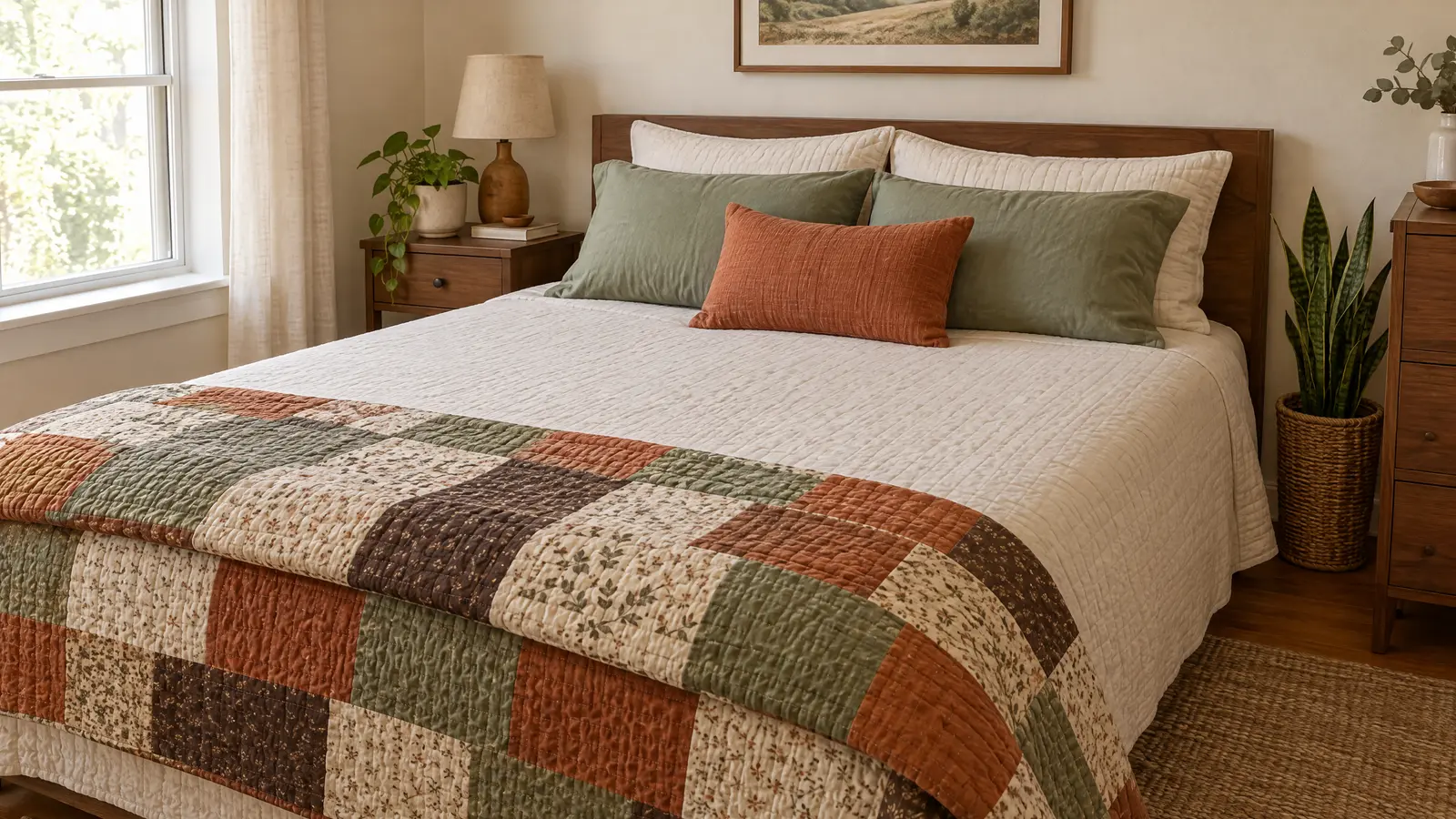
It also has more presence. Patchwork and hand-stitched quilts bring pattern and texture that a flat coverlet can’t, which helps when the bed is the main thing you see from the door.
Quilts double as throws, too. In a studio, a quilt can move from the foot of the bed to the sofa in the evening, which saves buying a separate blanket.
Getting the size right
Start with your mattress, not the label on the package. Standard US mattress sizes are:
- Twin: 38 x 75 inches (97 x 191 cm)
- Full: 54 x 75 inches (137 x 191 cm)
- Queen: 60 x 80 inches (152 x 203 cm)
- King: 76 x 80 inches (193 x 203 cm)
Subtract the mattress width from the cover width and halve it to get the drop on each side. A 90-inch-wide queen cover on a 60-inch mattress gives about 15 inches (38 cm) per side. That covers a typical 10 to 14 inch mattress but not a box spring.
If your mattress is extra deep or has a pillow top, size up. Many people put a king coverlet on a queen bed for a longer drop, and coverlets are thin enough that the extra fabric still lies neatly. Sizing up a thick quilt is bulkier, so measure before you buy.
In a small space
In a small bedroom, the bed takes up most of the floor, so its top layer sets the tone for the room. A coverlet in a calm, solid color keeps things looking tidy, and a folded quilt at the foot adds texture without covering the whole bed in pattern.
Storage is the bigger difference. A coverlet folds down to a few inches and slides into a shallow under-bed box. A quilt takes a deeper bin or a closet shelf, so think about where it will live in summer before you buy one in a large size.
Laundry matters in apartments as well. A king quilt can be too much for a compact or stacked washer, and it takes a long time to dry on a rack. A coverlet washes and dries easily in a shared laundry room. For more ways to layer textiles in a rental, see our rental bedroom guide and how to make your home feel cozy.
Care and lifespan
Follow the care label first. Most cotton and polyester coverlets and quilts take a cold, gentle machine wash with mild detergent, then a low tumble dry or a line dry. Don’t overload the machine; the cover needs room to move to rinse clean.
Cotton quilts often shrink slightly and crinkle after the first wash, which many people like. If you want the size to stay exact, wash cold and skip high heat.
On a quilt, look at the stitching. Closer quilting lines keep the batting from shifting and bunching over years of washing. Vintage or handmade quilts are better hand washed or spot cleaned, since a machine can strain old seams.
Both last longest when you rotate them. Spot clean small marks between washes, keep the bed out of strong direct sun if you can, and store off-season covers in a breathable cotton bag rather than sealed plastic.