Fleece vs Knit Throw Blankets
Fleece or knit throw? Compare warmth, weight, breathability, washing, snagging and storage to pick the right blanket for your sofa, bed and pets.
The short answer
Choose a fleece throw if you want the most warmth for the least weight, a blanket you can wash every week, and a low price. Choose a knit throw if you care about texture and looks, want something that breathes on warm evenings, or want a throw that sits on the sofa as decor. If you have a cat or dog that kneads, fleece is usually the safer pick, because open knit stitches snag on claws.
Side by side
| Fleece throw | Knit throw | |
|---|---|---|
| Typical fiber | Polyester | Cotton, acrylic, wool or blends; chunky knits often acrylic or chenille |
| Warmth for weight | High; traps heat well | Moderate; depends on fiber and stitch |
| Weight | Light | Medium to heavy; chunky knits are heavy |
| Breathability | Low; can feel stuffy | Good, especially open-stitch cotton |
| Common throw size | About 50 x 60 inches (127 x 152 cm) | About 50 x 60 inches; chunky knits often smaller |
| Washing | Machine wash cold, tumble dry low | Varies; many need gentle cycle and flat drying |
| Pets and snags | Holds hair but resists claws | Loose stitches catch claws and jewelry |
| Cost level | Usually cheapest | Mid-range; wool and hand-knit cost more |
| Folded bulk | Compact | Bulky, especially chunky knits |
When fleece is the better buy
Fleece is the practical choice. Polyester fleece holds warmth well for its weight, shrugs off spills and dries quickly, so it suits kids, pets, movie nights and anyone who naps under a blanket every afternoon.
It also handles frequent washing. A fleece throw can go through the machine weekly without stretching out of shape, which matters if it lives on a sofa that the dog also uses.
If you want fleece on a bed, look at our guide to twin fleece blankets, which are larger than a throw and cover a twin mattress. If you get cold at a desk or on the sofa, a wearable blanket shawl keeps your shoulders covered while leaving your hands free.
The trade-offs are breathability and looks. Fleece can feel clammy if you run warm, it builds static in dry winter air, and lower-quality fleece pills over time.
When a knit throw is the better buy
A knit throw is the better buy when the blanket is part of the room. Cable knits, waffle weaves and chunky loops add texture to a plain sofa or bed in a way flat fleece doesn’t, and a knit looks deliberate folded over a chair.
Knits also breathe. Air moves through the stitches, so a cotton knit is comfortable on a cool summer evening or for a warm sleeper who still wants something over their legs. Wool knits are warmer and handle temperature swings well, but they need gentler care.
For the clean, neutral style that suits most small rooms, see our guide to Scandinavian throw blankets.
The trade-offs are weight and upkeep. Chunky knits are heavy for their size, and many can’t go in a standard washer. Open stitches catch on claws, rings and zippers, and a pulled loop is hard to fix.
Picking the size
Throws are not standardized, but most fall into a few sizes:
- About 50 x 60 inches (127 x 152 cm): the common throw size. It covers one person on a sofa from shoulders to feet.
- About 60 x 80 inches (152 x 203 cm): an oversized throw. It covers two people on a sofa or works as a top layer across the foot of a full or queen bed.
- About 66 x 90 inches (168 x 229 cm): a typical twin blanket, big enough to tuck in on a twin bed.
Chunky knits often come smaller than 50 x 60 inches because of their weight, so check the measurements, not just the word “throw.”
In a small space
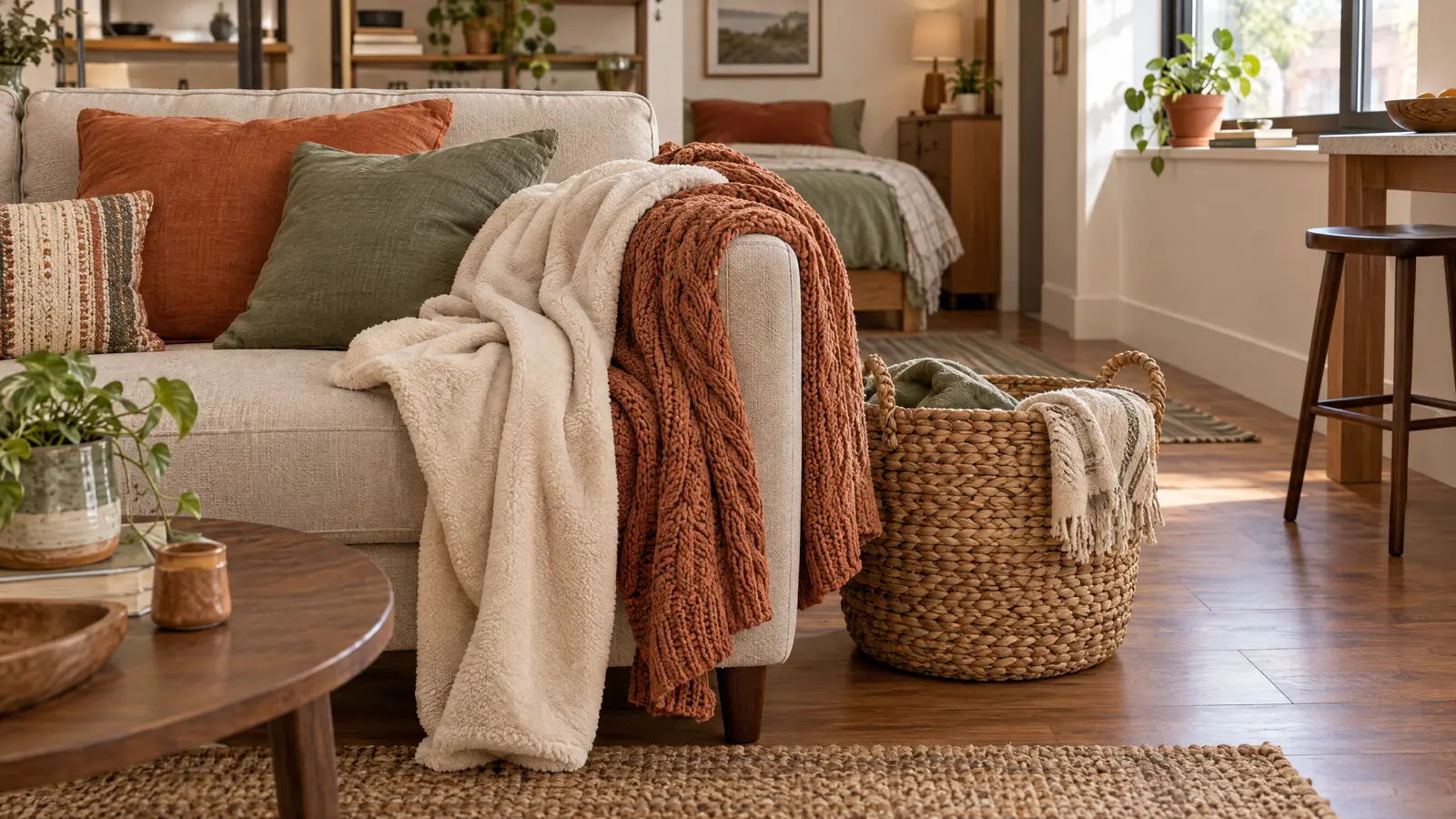
In a studio or small living room, a throw usually lives in view, so how it looks folded matters. A knit throw draped over a sofa arm reads as decor; a fleece throw usually looks better folded into a basket or tucked into a drawer.
Bulk is the other factor. Two or three fleece throws fold small enough to share one basket or one shelf. A single chunky knit can fill a basket on its own, so if storage is tight, pick one good knit for display and keep fleece for everyday use.
Weight matters on small furniture, too. A heavy knit slides off a narrow sofa arm or a slim accent chair. Keep the heaviest knits on the bed, where the size of the mattress supports them. For more ways to layer textiles without clutter, see how to make your home feel cozy.
Care and lifespan
Fleece is simple: wash cold on a gentle cycle, tumble dry low or hang to dry, and skip high heat, which can flatten or glaze the fibers. Many people also skip fabric softener, since it can coat polyester and reduce softness. Wash fleece away from towels and other lint-shedding items, because fleece picks up lint easily.
Knits depend on the fiber, so read the label. Cotton and acrylic knits often take a gentle machine cycle in cold water. Wool usually needs hand washing or a wool cycle, and most knits should dry flat, because hanging a wet knit stretches it out of shape.
Expect a well-made knit to last for years if you avoid snags and store it folded rather than hung. A fleece throw lasts a long time too, but it tends to pill and lose some loft with frequent washing. A fabric shaver can tidy pilling on both.