How to Organize a Small Closet
Organize a small reach-in closet step by step: measure, edit, double the hanging space, add shelves and bins that fit, and put the floor and door to work.
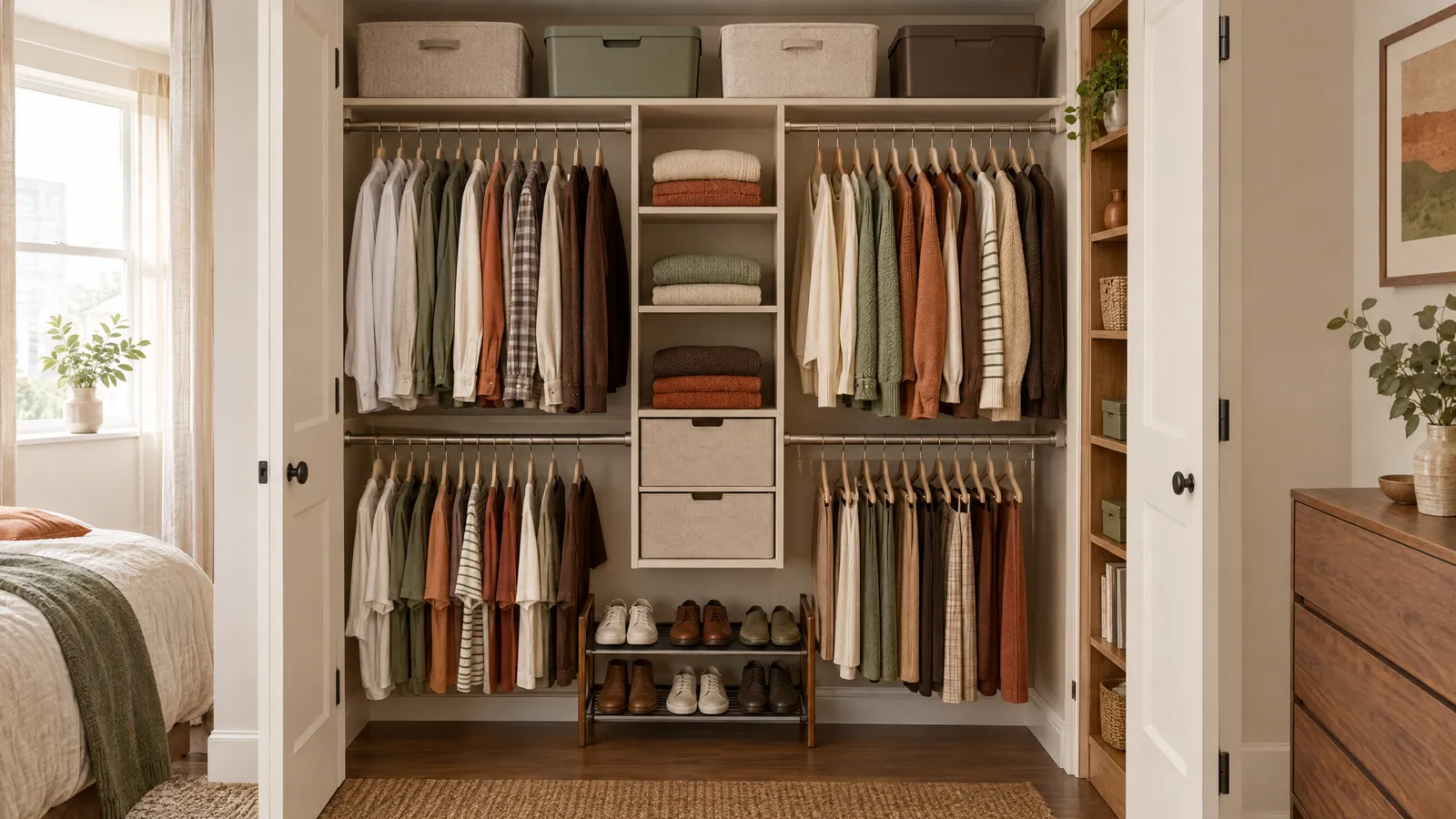
Before you start
A small closet usually fails in the same places: one rod with empty space under short shirts, a single high shelf piled with things you can’t reach, a floor full of shoes, and dead space hidden behind the door frame. The fix is to measure, edit, and then give every category its own zone, using the full height of the closet.
Most reach-in closets are about 24 inches (61 cm) deep and 4 to 8 feet wide, with one rod at around 66 inches (168 cm) and a shelf just above it. The door opening is often several inches narrower than the inside, so the side walls behind the frame, called returns, go unused. Those returns and the space above the shelf are where most small closets have room to spare.
What you need
- A tape measure, a pencil and a notepad or your phone’s notes app
- Slim, matching hangers (non-slip if your clothes slide off)
- A second hanging rod, either installed or the kind that hooks over the existing rod
- Shelf dividers and bins sized to your shelf depth
- A shoe rack or a small drawer unit for the floor
- Optional: an over-the-door organizer and a battery-powered motion-sensor light
Step by step
-
Empty it and measure. Take everything out. Measure the inside width, depth and height, the rod height, the shelf depth, the gap from the shelf to the ceiling, and the width and height of the door opening. Note how wide each return is. Write it all down before you buy anything, because every organizer has to pass through that opening.
-
Edit by category. Sort into three piles: keep, store elsewhere, and donate. Off-season coats and formal clothes can move to under-bed boxes or the top shelf. If you didn’t wear something through a full year of seasons, it is a strong candidate to go. To check next year, hang everything with the hooks facing backward and turn each hanger around after you wear it; the ones still backward are what you never reached for.
-
Measure your hanging clothes. Group what’s left by length. As a rough guide, shirts, jackets and folded trousers need about 40 inches (102 cm) of drop below the rod; dresses and long coats need about 60 to 70 inches (152 to 178 cm). For rod width, allow about 1 inch per shirt on slim hangers, 2 inches per sweater or jacket, and 3 to 4 inches per winter coat. Add it up and compare it with the rod you have.
-
Double the hanging space. If most of your clothes are short, double-hang one section: the top rod at about 80 to 84 inches (203 to 213 cm) and the lower rod at about 40 to 42 inches (102 to 107 cm). Keep a section 12 to 24 inches wide at full length for long pieces. In a rental, a second rod that hooks over the existing one adds a row without drilling. Check the math first: if your rod is at 66 inches, the lower row works best for short tops, skirts and folded trousers, not a second row of long shirts.
-
Use the space above the rod. Closet shelves are usually 12 to 16 inches (30 to 41 cm) deep. Keep folded stacks to about 10 to 12 inches (25 to 30 cm) high and use shelf dividers so they don’t lean. If there are 20 inches or more between the shelf and the ceiling, a stackable shelf unit or a row of lidded bins doubles that space. Put rarely used things up there, such as off-season clothes, spare bedding and bags, and keep the shelf edge clear of the rod so hangers lift off easily. Our guides to storage shelf organizers and plastic organizer boxes cover sizes that fit a standard shelf.
-
Fill the returns. The side walls hidden behind the door frame are often 6 to 12 inches (15 to 30 cm) wide, enough for a narrow shelf tower, a column of hooks for bags and belts, or a slim tiered unit for folded T-shirts. Our guide to narrow closet shelves explains which widths and depths suit a return. Measure the unit’s depth against the return, and make sure it can turn through the door opening.
-
Sort out the floor. Under the short-hang section, a two- or three-tier shoe rack keeps pairs visible. Allow roughly 7 to 9 inches (18 to 23 cm) of rack width per pair, more for boots. If your dresser is full, a small drawer unit can sit under the lower rod instead, as long as it is shorter than the drop of the clothes above it. Keep the front 6 inches clear so the doors close.
-
Put the door to work. A hinged door can take an over-the-door organizer for shoes, scarves, belts or cleaning supplies. Check three things first: the hooks have to fit the gap at the top of the door, the pockets usually add 2 to 4 inches (5 to 10 cm) of depth, and the door still has to close past the shelf and the hangers. Bifold and sliding doors usually can’t take one, so use the side walls instead.
-
Light it and label it. A battery-powered motion-sensor light under the shelf means you can see the back corners. Label the fronts of high bins so you don’t have to pull each one down, and leave about 10 percent of the rod free so new things have a place.
How much rod do you need?
Do the math before you buy a second rod or a bigger organizer. Say you have 30 shirts and blouses, 8 jackets and sweaters you prefer to hang, and 4 winter coats:
| Item | Count | Rod space each | Total |
|---|---|---|---|
| Shirts on slim hangers | 30 | about 1 inch | 30 inches |
| Jackets and hung sweaters | 8 | about 2 inches | 16 inches |
| Winter coats | 4 | 3 to 4 inches | 12 to 16 inches |
| Total | 58 to 62 inches |
A 48-inch (122 cm) closet rod can’t hold that comfortably, but double-hanging 30 inches of it gives you about 78 inches of rod in total. Moving the coats to a hook rail by the front door frees another 12 to 16 inches. If the numbers still don’t fit, edit again before you buy anything.
Small-space tips
- Match your hangers. Slim, matching hangers take much less rod space than bulky wooden or tubular plastic ones, and clothes hang at the same height, so the closet looks tidier.
- Rotate seasons. Keep only the current season at arm’s reach and swap twice a year. A small closet works much better holding half a wardrobe.
- Pick bins for what goes in them. Fabric bins suit soft items on a shelf; clear plastic is better for anything you need to find quickly or keep away from dust. Our comparison of plastic and fabric storage bins goes through the trade-offs.
- Add a hook for tomorrow. One hook on the inside wall for the next day’s outfit or a bag stops clothes from piling on the bed.
- Stay renter-friendly. Freestanding units, hook-on rods, tension rods and over-the-door organizers need no drilling. For more ideas that protect your deposit, see our rental bedroom plan.
Mistakes to avoid
- Buying organizers before measuring. A shelf unit that is half an inch too deep or too wide for the opening is useless. Measure the opening, not just the inside.
- Overloading the top shelf. Builder shelves and their brackets have limits, and heavy things overhead are hard to lift down safely. Keep books, boxes of papers and anything heavy at waist height or on the floor.
- Deep, opaque bins up high. You won’t remember what is in them. Use clear or labeled bins with handles on high shelves.
- Stacking too high. Folded piles over about 12 inches topple every time you pull from the middle.
- Organizing before editing. Bins and dividers only help once the clothes you don’t wear are gone.
- Blocking the doors. Shoes and bins that creep past the door line stop the doors closing and get kicked every day.
Questions people ask
How do I maximize space in a small closet?
Use the height. Add a second rod for short items, bins or a second shelf above the existing shelf, a shoe rack or drawers on the floor and an organizer on the door. Switch to slim matching hangers, fold bulky knits instead of hanging them, and move off-season clothes elsewhere. Measure before you buy: most reach-in closets are about 24 inches deep, and everything has to fit through the door opening.
What height should closet rods be?
A single rod usually sits about 66 inches (168 cm) from the floor. For double hanging, the top rod typically goes at 80 to 84 inches and the lower rod at about 40 to 42 inches, giving each row roughly 40 inches for shirts and jackets. Dresses and long coats need about 60 to 70 inches below the rod, so keep one section single-hung. Center the rod about 12 inches from the back wall.
How do I organize a closet without drilling?
Choose freestanding and hook-on pieces: a second rod that hangs from the existing one, a freestanding shelf unit or drawer tower, tension rods between the side walls, an over-the-door organizer and bins on the existing shelf. Adhesive hooks suit light items if you follow the weight rating on the package and test removal on a hidden spot first, because some can lift paint. Everything else leaves with you when you move.
Should I fold or hang sweaters in a small closet?
Fold most knits. Hanging can stretch the shoulders of heavy sweaters, and each one takes about 2 inches of rod, while a folded stack uses shelf space that might otherwise go unused. Keep stacks about 10 to 12 inches high and use a shelf divider so they don't topple. Hang lightweight cardigans and structured jackets, and store bulky off-season knits in a lidded bin.