Under-Sink Organization Ideas
Under-sink organization ideas for kitchen and bathroom cabinets: measure around the pipes, then fit shelves, bins, a tension rod, door racks and a leak liner.
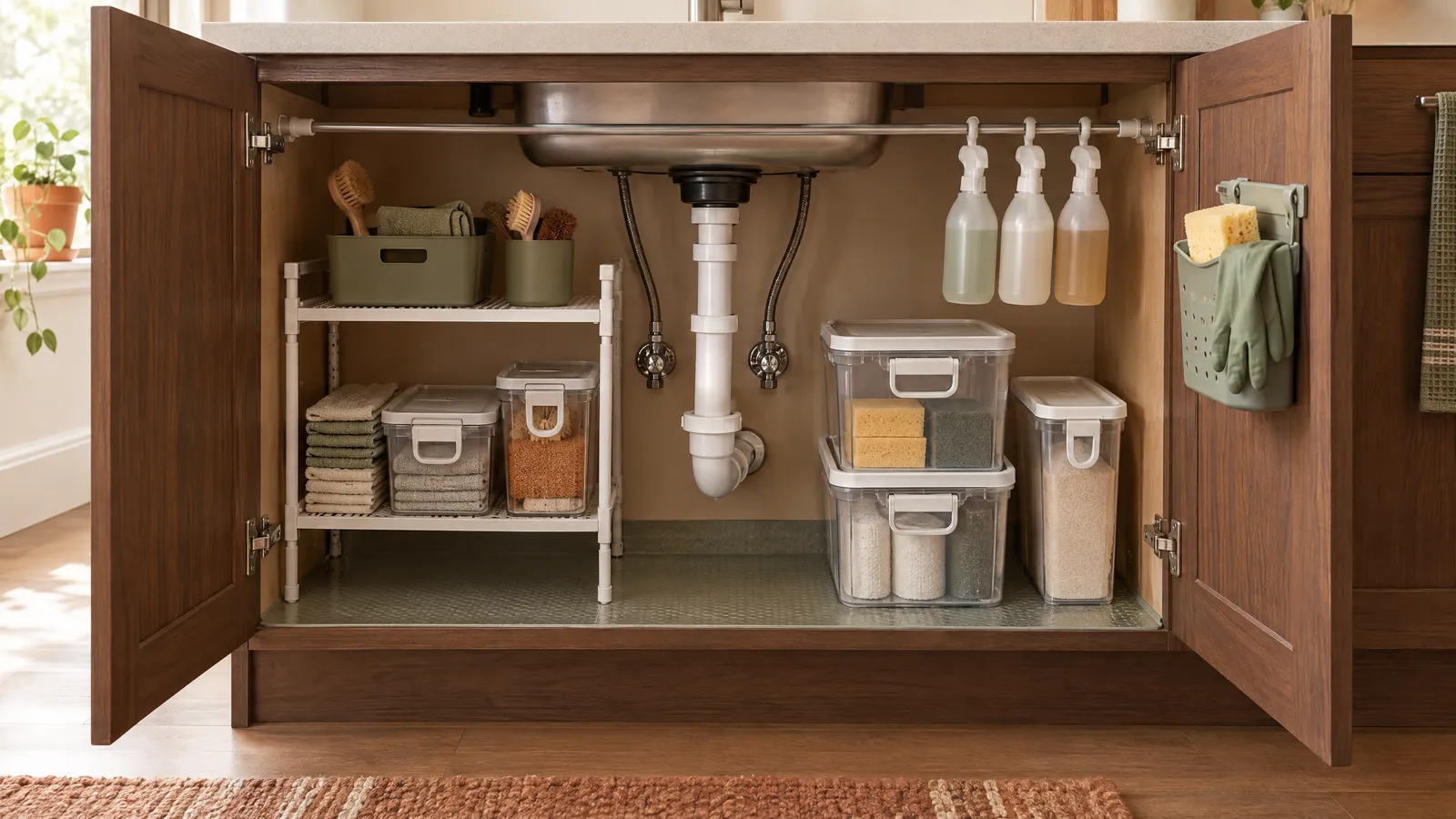
Why the cabinet under the sink is hard to use
The cabinet under a sink is often the biggest storage space in a kitchen or bathroom and the most wasted. The drain trap hangs down in the middle, supply lines and shutoff valves sit at the back, and the opening is narrower than the space behind it. Most of it ends up as a pile of bottles you have to dig through on your knees.
The fix is to work with the plumbing, not against it: measure the clear zones, store upward on each side of the pipes, use the door and the top of the cabinet, and keep the shutoff valves easy to reach.
Typical sizes, before you measure your own:
| Cabinet | Usual outside width | Usual depth |
|---|---|---|
| Kitchen sink base | 30 to 36 inches (76 to 91 cm) | about 24 inches (61 cm) |
| Bathroom vanity | 24 to 36 inches (61 to 91 cm) | about 18 to 21 inches (46 to 53 cm) |
The inside is always smaller than these numbers once you take off the side panels, the face frame and the pipes. The clear height under the sink bowl and the trap is usually much less than at the sides, so measure each zone separately.
What you need
- A tape measure, a flashlight and an old towel
- A waterproof cabinet liner or a drip tray with a raised edge
- An adjustable under-sink shelf, or two stackable bins
- Two or three clear bins with handles
- A tension rod about as long as the cabinet’s inside width
- Small adhesive hooks or a door rack for sponges and gloves
Step by step
-
Empty it and check for leaks. Take everything out and dry the floor of the cabinet. Look for drips, stains, soft spots or swollen edges, then run the tap for a minute and feel each joint with a dry hand. In a rental, report any leak to your landlord before you organize anything.
-
Measure the zones. Write down five numbers: the width of the door opening at its narrowest point (including any center post between two doors), the inside width and depth, the clear height on the left and right of the pipes, the clear height under the trap, and how far the hinges stick in. A quick sketch with these numbers makes shopping much easier.
-
Line the floor. Cut a waterproof liner or a drip tray with a raised edge to fit the cabinet floor. It catches small leaks and drips from bottles, protects the cabinet base, which is often particleboard that swells when wet, and makes wiping up a 30-second job.
-
Sort and cut down. Keep only what you use at that sink. In a kitchen, that usually means dish soap refills, dishwasher detergent, sponges, trash bags and one or two cleaners. In a bathroom, it is cleaning supplies, spare toilet paper and toiletry backups. Combine duplicates, get rid of dried-out products following the label, and move extra stock to a closet.
-
Build up on each side of the pipes. An adjustable two-tier shelf with movable legs or a cutout fits around the drain and doubles the floor space on one side. Check that the top tier clears the bottom of the sink bowl and that the shelf doesn’t press on the supply lines. Our guide to storage shelf organizers covers widths and adjustable designs.
-
Use bins as drawers at the back. Bins with handles pull forward like drawers, so nothing gets lost behind the trap. Group by task: one for dishwasher supplies, one for scrubbing, one for backups. Clear plastic is the right material here because it shrugs off drips and you can see what’s inside; our guide to plastic organizer boxes explains sizes, and the comparison of plastic and fabric storage bins explains why fabric doesn’t belong under a sink.
-
Hang spray bottles from a tension rod. Fit a tension rod across the cabinet a few inches below the top and hang spray bottles from it by their triggers. That frees the floor for bins. Make sure the rod and the bottles clear the pipes, the drain and any garbage disposal.
-
Use the inside of the door. Small adhesive hooks or a slim door rack hold rubber gloves, a brush, a sponge caddy or a roll of trash bags. Before you stick anything on, close the door slowly and check how much room there is between the door and the shelves or pipes when it’s shut. Often there are only a couple of inches.
-
Keep the valves and the trap clear. Leave a clear path to the shutoff valves so you can turn off the water in seconds if a pipe starts leaking. Nothing should rest on the trap, the disposal or the supply lines. Check the liner for water once a month when you grab a refill.
What goes where
Once the cabinet is measured and sorted, this map works for most kitchen sink cabinets:
| Zone | What to keep there |
|---|---|
| Inside of the door | Sponges, rubber gloves, a dish brush, a roll of trash bags |
| Tension rod near the top | Spray bottles you use every week |
| Shelf on one side of the pipes | Dish soap refills and dishwasher detergent |
| Other side of the pipes | Trash bags, bin liners and cleaning cloths |
| Bin at the back | Backups and things you use less than once a month |
| Under the trap | Only the liner, or a flat bin of cloths that won’t block access |
If a garbage disposal or another appliance plugs into an outlet inside the cabinet, keep the plug and cord dry and easy to reach, and never stack bins against them.
Kitchen vs bathroom
Kitchen sink cabinets are deeper and often share space with a disposal, a water filter or dishwasher lines. Put the things you use daily, such as dish soap and sponges, at the front or on the door, and backups in a bin at the back.
Bathroom vanities are shallower, so two stacked clear drawers or a small turntable of about 9 to 10 inches (23 to 25 cm) across work better than a full-width shelf. Our plan for making a small bathroom work covers storage beyond the vanity. Let hair tools cool fully before you store them, and keep them in a bin away from the pipes.
Safety
- Children and pets. If you have young children or pets that open cabinets, store cleaning products up high or fit a child-safety latch to the doors.
- Keep chemicals apart. Store bleach away from ammonia-based and acidic cleaners, since mixing them releases dangerous fumes, and keep every product in its original labeled container.
- Leave the plumbing alone. Don’t hang anything from the pipes or strap organizers to them.
Small-space tips
- Move overflow off the cabinet. If it’s still full, a magnetic rack on the side of the fridge or washing machine can hold paper towels and the spray you use every day.
- Go vertical before you go wide. Two stacked bins on one side of the pipes hold more than one wide bin that hits the drain.
- No cabinet at all? Under a pedestal sink or a wall-hung sink, a slim two-tier shelf or a small rolling cart beside it holds the basics.
- Use the cabinet top. A narrow shelf or a few hooks on the inside of the face frame, above the door opening, holds small brushes and scrubbers.
Mistakes to avoid
- Buying a pull-out before measuring. Hinges and a center post can make the opening several inches narrower than the inside.
- Fabric and cardboard storage. Both soak up leaks and drips. Use plastic or metal.
- Blocking the shutoff valves. In a leak, every second spent moving bottles counts.
- Paper goods on the cabinet floor. Keep toilet paper and paper towels in a lidded bin or on a shelf tier, off the floor.
- Filling every inch. Leave a little space around the pipes so you can see a drip early.
Questions people ask
How do you organize under a sink with pipes in the way?
Work on both sides of the pipes instead of around them. Measure the clear width and height to the left and right of the drain, then fit an adjustable two-tier shelf or stacked bins in those zones, with a pull-out bin behind for backups. Hang spray bottles from a tension rod near the top and put sponges and gloves on the door. Keep the shutoff valves clear so you can reach them quickly.
What should not be stored under the kitchen sink?
Skip anything a slow leak would ruin, such as paper goods sitting directly on the cabinet floor, cardboard boxes and fabric bins. Keep bleach away from ammonia-based and acidic cleaners, because mixing them releases dangerous fumes. If you have young children, move cleaning products up high or fit a child-safety latch. Nothing should touch the drain trap or block the shutoff valves.
How deep is a kitchen sink base cabinet?
A standard kitchen base cabinet is about 24 inches (61 cm) deep from the front to the wall, but the usable inside is a little less once you allow for the face frame, the door and the pipes at the back. Bathroom vanities are usually shallower, often about 18 to 21 inches. Measure the inside depth and the door opening before you buy shelves or pull-out drawers.
Are pull-out drawers worth it under a sink?
They can be, if they fit. A pull-out lets you reach the back without kneeling, but it has to clear the door opening, the hinges and any center post, and its sides must run beside the pipes, not into them. Measure the narrowest point of the opening and the clear height on each side. In a rental, choose a freestanding pull-out that needs no screws. Clear bins with handles are a cheaper alternative.