Balcony Garden Plan for Small Spaces
Plan a small balcony garden: check sun and weight limits first, then pick planters that won't tip, grow up inside the railing and follow your fire rules.
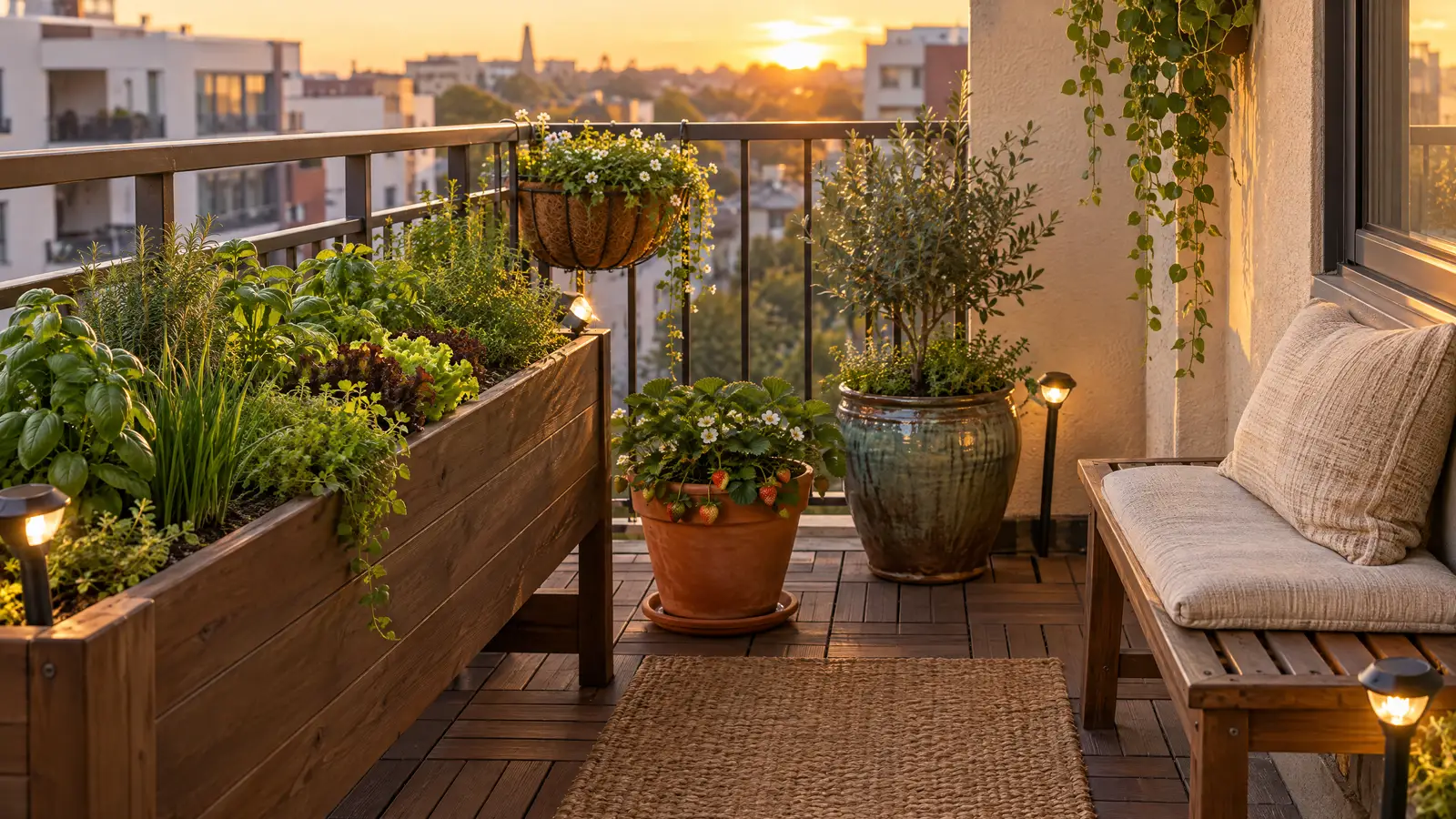
The problem
Many apartment balconies are only 4 to 6 feet (1.2 to 1.8 m) deep and 8 to 12 feet wide, and some are little more than a 3-foot ledge. Once the door swing and a chair take their share, you may have a strip 18 to 24 inches (46 to 61 cm) wide for plants. That’s enough for a real garden if you grow up and along the edges instead of across the floor.
The bigger limit is weight. Wet soil is heavy: a gallon of water alone weighs about 8.3 pounds (3.8 kg), and a large glazed pot full of damp potting mix can easily pass 50 pounds (23 kg). Every balcony is built to a load limit you can’t see, and older ones may have rust, rot or cracked concrete. Your landlord or building manager should be able to tell you what’s allowed; if no one can, keep the load light and spread out.
Then come the building rules and the weather. Leases often ban planters hung on the outside of the railing, open flames and anything that drips onto the unit below. Wind gets stronger a few floors up, so light pots tip and hanging baskets swing. And the sun depends on which way you face: in the US, a south- or west-facing balcony can bake in the afternoon, while a north-facing one may see almost no direct sun.
The plan
-
Map the sun for one day. Check the balcony every couple of hours on a clear day and note when it gets direct sun. Six or more hours counts as full sun, enough for strawberries, tomatoes and basil; three to six hours suits lettuce, parsley and mint; less than that means shade-tolerant foliage plants. Note the wind too: if chair cushions blow around, plan on heavier pots and lower, bushier plants. Our beginner’s guide to balcony gardening covers which easy plants suit each spot.
-
Get the weight limit and the rules before you buy. Ask your landlord or building manager what load the balcony is rated for and what the lease says about planters, railings, grills and flames. Put the heaviest pots against the building wall rather than at the outer edge, and spread them out instead of grouping them in one corner. Keep the door, a walkway at least 24 inches (61 cm) wide and any fire escape ladder or floor hatch clear at all times.
-
Choose pots by weight and wind. Glazed ceramic planters are heavy enough to stay put in a gust, so use one or two for anchor plants at floor level, against the wall. Use lighter plastic or resin pots for everything else, and fill them with potting mix, never garden soil, which is heavier and drains poorly. Every pot needs a drainage hole and a saucer so water doesn’t run onto the balcony below. Water slowly in the early morning or evening so it soaks in instead of running off, and empty saucers after rain so they don’t add weight or breed mosquitoes. Shallow bowl planters suit succulents and herbs that like to dry out between waterings.
-
Grow at waist height in one container. A raised planter on legs puts the soil at about 30 inches (76 cm), saves your back and keeps the floor underneath clear for airflow and sweeping. A trough 8 to 12 inches (20 to 30 cm) deep is enough for lettuce, herbs and radishes; tomatoes want a container at least 12 inches deep and roughly 5 gallons (19 L) per plant. A full trough is heavy, so check both the planter’s rated load and the balcony’s before you fill it.
-
Grow up, on the inside of the railing. A strawberry pot holds several plants in side pockets on one pot’s footprint, and hanging basket planters use the air above the floor. Hang baskets from a bracket or hook rated for the wet weight, on the inside of the railing, and from the ceiling only if your building allows it. Never hang anything over the outer edge, where a fall could hit someone below. Light macrame hangers suit small trailing plants that won’t get heavy.
-
Shelter seedlings from the wind. A mini greenhouse lets you start seeds a few weeks earlier in spring and keeps tender plants out of the wind. A covered frame catches wind like a sail, so weigh down the base or tie the frame to something solid. On sunny days, open the cover so the plants don’t overheat.
-
Add light without wiring. Solar spotlights charge by day and switch on at dusk, with no outlet and no extension cord across the doorway. They need direct sun on the panel, often six hours or more for a full charge, so on a north-facing balcony expect a shorter glow. Clip or stake them inside the railing.
-
Treat any flame as a rules question first. Many fire codes and leases ban open flames on apartment balconies, including fire pits and charcoal grills, so check yours before you buy anything. If your building does allow a tabletop fire pit, set it on a stable, nonflammable surface well away from railings, awnings, plants, cushions and the wall, and follow the maker’s clearances. Never use it in wind or leave it burning unattended, keep a lid or fire extinguisher within reach, and let it cool completely before you move or store it.
Before you shop
- Balcony depth and width, and the clear strip left after the door swing and a chair.
- Hours of direct sun, and which direction the balcony faces.
- The weight limit and the planter, railing and flame rules from your landlord or building.
- Railing height, rail thickness and whether it’s solid or open, for any bracket or rail planter.
- Where water will drain, and whose balcony is below yours.
- How you’ll carry water out, and how far the nearest tap is.
The guides for this room
- Strawberry Pots and Planters Updating — Several plants in side pockets on one pot's footprint.
- Hanging Basket Planters Updating — Uses the space above the floor, inside the railing.
- Macrame Hanging Planters Updating — Light hanging planters for small trailing plants.
- Plastic Raised Planters Updating — Waist-high growing without a yard.
- Mini Greenhouses for Plants Updating — Start seeds early and shelter them from wind.
- Bowl Planters Updating — Shallow bowls for succulents and herbs.
- Glazed Ceramic Planters Updating — Heavier pots that won't tip in a gust.
- Solar LED Spotlights Updating — Evening light with no wiring.
- Tabletop Fire Pits Updating — A small flame, only where your building allows one.